

Wicked Winter Weather: When Big Storms Lead to Big Claims
Over the last few weeks, a massive winter storm hammered more than 240 million people in over 40 states—from Arizona to Maine—stretching roughly 2,300 miles and bringing deadly snow and ice.
When storms like these hit Maine, headlines tend to focus on power outages, fallen trees, and icy roads. But in the days after the storm, a different kind of harm often shows up: people get hurt inside apartment buildings, condos, and shared communities because property owners and managers fail to stabilize hazards fast enough.
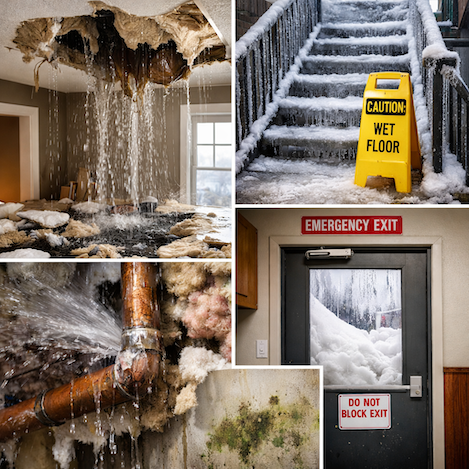
A burst pipe can soak a ceiling until it gives way. An ice dam can push water behind walls and onto stair treads. A frozen entryway can turn into a slip-and-fall trap when no one clears or treats it. These incidents don’t always qualify as “acts of God” that excuse responsibility. In many situations, a landlord, condominium association, HOA, or property manager can prevent the injury—or reduce the risk—by responding promptly and documenting what they did.
This article explains how post-storm injuries happen, how liability typically works in burst pipe injury liability cases, and what documentation helps win ice storm property injury claims.
Storm damage becomes personal injury when someone ignores the next step
Winter storms create conditions. Negligence turns conditions into injuries.
A storm can knock out heat, freeze plumbing, or overwhelm a roof. But property owners and managers still control what happens next: they can shut off water, place warning signs, block access, call emergency mitigation, clear exits, and document hazards. When they delay action—or take shortcuts—people get hurt.
Common post-storm injury scenarios include:
- Ceiling collapses after a roof leak, ice dam, or burst pipe saturates drywall
- Slip-and-fall injuries on untreated stairs, entryways, parking lots, and interior corridors
- Trip hazards from warped flooring, loose carpet, and debris after water intrusion
- Blocked exits and egress hazards when snow piles up against doors or management stores damaged materials in hallways
- Electrical hazards from water near outlets, panels, or extension cords used during outages
- Mold-related respiratory flare-ups when water damage goes unaddressed for days or weeks (especially for children, seniors, and people with asthma)
Burst pipes: the injury claim often starts with “foreseeable” and ends with “documentation”
Pipes rarely burst without warning signs. A building often shows red flags before the failure: weak heat, frozen sections, prior leaks, poor insulation, or recurring maintenance issues. After the burst, the risk escalates quickly—water spreads, ceilings sag, and surfaces become slick.
In burst pipe injury liability cases, the key questions usually include:
- Who controlled the area where the injury happened?
Landlords and property managers often control common areas. Condo associations or HOAs typically control shared structural components, hallways, stairwells, and building systems (depending on governing documents). - Who knew—or should have known—about the hazard?
Notice can come from tenant complaints, prior leaks, visible staining, a reported loss, or an inspection that revealed damage. - How fast did they respond after the storm or the leak report?
A prompt response can reduce risk. A slow or nonexistent response often strengthens the claim. - Did they take basic safety steps while repairs were pending?
Warning signs, barriers, temporary lighting, slip-resistant mats, and restricted access matter.
Ceiling collapses: the “hidden danger” argument cuts both ways
Ceiling collapse injuries often occur without a dramatic warning to the person below. Water can pool above drywall and insulation. The ceiling can look “fine” until it fails.
Property owners and managers can still spot danger if they pay attention to:
- Bubbling paint, sagging drywall, staining, or dripping
- Repeated roof leak reports
- Ice dam conditions and poor attic ventilation
- Emergency mitigation that never happened (or happened too late)
A collapse case often turns on whether management acted reasonably once they learned about the leak or water intrusion. If they allowed residents to walk under a visibly compromised ceiling, liability becomes much easier to prove.
Unsafe stairs, unaddressed leaks, blocked exits: post-storm hazards that should never linger
After an ice storm or nor’easter, property owners and associations often focus on the “big” problem—power, heat, or a major leak. Meanwhile, smaller hazards quietly create injury exposure.
Examples that routinely support ice storm property injury claims:
- Ice-covered exterior stairs with no salt, sand, or shoveling plan
- Interior stairs or lobbies where wet boots, melted snow, and leak runoff create slick surfaces with no mats or cones
- Dark hallways during outages with no emergency lighting plan
- Blocked fire exits from shoveled snow piles or stored debris
- Temporary repairs that create new hazards (loose boards, cords, fans, dehumidifiers in walk paths)
Courts and insurers tend to evaluate these cases through a simple lens: Did the responsible party take reasonable steps to keep people safe after the storm created known risks?
Who can be responsible: landlord, HOA, property manager, contractor, or multiple parties
Many winter injury cases involve shared responsibility across multiple entities:
- Landlords often owe duties to maintain safe common areas and address known hazards in a reasonable timeframe.
- HOAs/condo associations often manage roofs, exterior structures, stairwells, and common elements. Governing documents and management contracts can matter as much as the physical facts.
- Property managers may control maintenance decisions, vendor selection, inspections, and response timelines.
- Snow removal and maintenance contractors can contribute if they perform negligent work, create hazards, or fail to follow contract requirements.
- Insurers and adjusters don’t usually “cause” the hazard, but delays and documentation gaps can shape how the claim resolves.
A strong investigation identifies who controlled the hazard, who received notice, and who had the authority to fix it.
Documentation that wins winter storm injury cases
Insurance companies fight these claims hardest when evidence looks thin or the timeline looks fuzzy. The best cases show a clear sequence: hazard → notice → failure to act → injury → damages.
Helpful documentation includes:
1) Scene proof (as close to the incident time as possible)
- Photos/video of the hazard from multiple angles
- Close-ups plus wide shots showing context (lighting, signage, barriers, exits)
- Footwear photos (tread condition can matter in slip cases)
- Measurements (ice thickness, puddle size, ceiling sag depth, debris field)
2) Notice and response timeline
- Tenant emails/texts/portal requests reporting leaks, cold units, ice, or blocked exits
- Work orders, vendor invoices, emergency mitigation logs, and call records
- Building-wide notices sent to residents (or the absence of them)
- Security footage and doorbell camera footage, if available
3) Maintenance history and prevention gaps
- Prior complaints about leaks, drafts, frozen pipes, roof problems, or recurring ice hazards
- Inspection notes, prior repairs, and deferred maintenance records
- Contracts for snow removal, roof work, plumbing, and emergency response
4) Injury proof and real-world impact
- ER/urgent care records, imaging, and follow-up treatment
- Work restrictions and lost wage documentation
- Witness statements and incident reports (request copies quickly)
What injured people should do after a post-storm incident
After medical care, timing matters. Evidence disappears quickly once crews begin cleanup.
- Report the incident in writing and request a copy of any incident report.
- Photograph the hazard immediately, before anyone “fixes” it.
- Preserve communications with the landlord, HOA, or manager.
- Identify witnesses and ask them to text or email what they saw.
- Avoid “cleanup guilt.” Safety comes first, and the property owner should address hazards promptly.
Talk to Peter Thompson & Associates about a winter storm injury claim
Post-storm injuries often look unavoidable at first. A closer investigation can reveal preventable failures: delayed mitigation after a burst pipe, ignored leak warnings before a ceiling collapse, untreated stairs, or blocked exits that should have stayed clear.
Peter Thompson & Associates helps injured Mainers document what happened, identify who controlled the hazard, and build the evidence insurers demand in serious burst pipe injury liability and ice storm property injury claims. When winter storms create dangerous conditions, swift action and strong documentation can make the difference.
This article provides general information and does not constitute legal advice.