

Teen Passengers: Why “One Extra Friend” Changes Liability
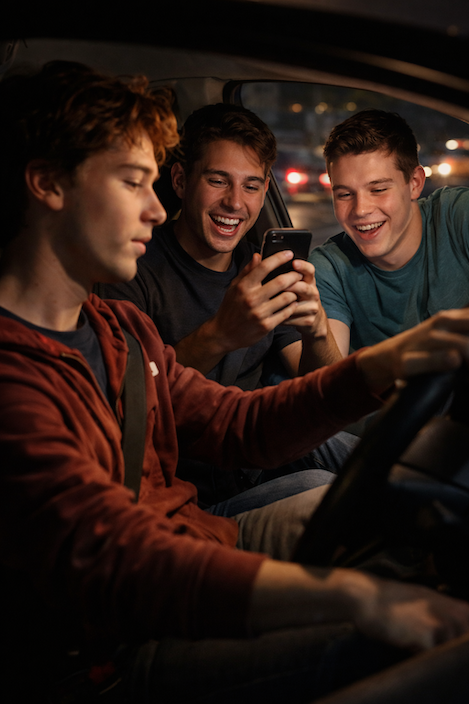
A teen driver can do everything “right” for weeks—then one Friday night changes the risk profile instantly. A friend hops in the passenger seat. The conversation gets louder. The music goes up. Someone shows a video. Someone dares the driver to “make the light.” The car drifts over the centerline, misses a stop sign, or rear-ends a stopped vehicle. The crash report may list “inattention” or “failure to maintain lane,” but the real cause often starts with a simple fact: a teen drove with other teens in the car.
Research has linked teen passengers to higher crash risk for young drivers, largely because passengers can distract novice drivers and increase risky decisions. That is exactly why many states—including Maine—restrict passengers for new teen drivers.
For families and injured victims, that “one extra friend” can also change liability exposure: who gets blamed, how fault gets divided, what evidence matters, and how insurance companies evaluate the claim.
Why teen passengers matter more than adult passengers
Teen drivers already face higher crash risk because they lack experience and because they misjudge hazards and speed more often than older drivers. Add teen passengers and you often add:
- Distraction (talking, laughing, showing phones, grabbing controls)
- Divided attention (the driver watches friends instead of the road)
- Peer pressure (speeding, showing off, taking risks)
- Noise and movement (multiple passengers, backseat activity)
NHTSA’s research has recognized that passengers can substantially increase crash risk for young, novice drivers and has tied part of that risk to distraction created by young passengers.
Maine’s teen-license rules reflect the “extra friend” problem
Maine doesn’t just “recommend” teen limits. It restricts them—especially early on.
Passenger restrictions for new teen drivers
For teens under 18, Maine’s Bureau of Motor Vehicles explains that for the first 270 days of licensure, the driver may not carry passengers other than immediate family members (with narrow exceptions) unless a qualified licensed driver sits beside the teen driver. That rule targets the most common high-risk setup: a novice teen driving peers without adult supervision.
Phone/device restrictions for teens
Maine also restricts phone use for teens and novice drivers. The Maine Legislature’s law library notes that:
- a learner’s permit holder may not operate while using or interacting with a handheld device or phone, and
- a driver under 18 with a license may not operate while using or interacting with a handheld device or phone—even when temporarily stopped in traffic or at a light.
When a teen violates these restrictions, the violation can become a major fact in both the police investigation and the insurance claim evaluation.
How “one extra friend” changes liability exposure
1) The teen driver’s liability often increases
In most crashes, the teen driver remains the primary focus. Insurers look at whether the teen:
- failed to keep a proper lookout,
- followed too closely,
- drove too fast for conditions,
- ran a sign/light,
- drifted lanes, or
- drove while distracted.
When the driver violates a safety rule that exists to prevent exactly that type of crash—like a passenger restriction or a handheld device ban—insurers and juries often treat it as powerful proof that the driver acted unreasonably.
2) The passenger can become part of the fault story
Passengers usually don’t “cause” crashes in the way a driver does, but their conduct can still matter. A passenger who:
- urges speeding,
- distracts the driver with a phone,
- grabs the wheel,
- blocks mirrors, or
- interferes with driving
can become a target in litigation—especially when multiple vehicles and multiple injuries exist.
Maine’s comparative negligence law reduces damages based on a person’s share of fault, and it bars recovery if the claimant is found equally at fault. That rule can matter in teen-passenger cases when (for example) an injured passenger sues, and the defense argues the passenger contributed to the crash by distracting the driver or encouraging risk.
3) Parents can face claims—but not automatically
Families often assume, “If it’s the parents’ car, the parents pay.” Maine law does not automatically impose owner liability through the “family purpose doctrine.” Maine courts have stated that Maine does not recognize that doctrine.
However, Maine does recognize negligent entrustment in appropriate cases—meaning a vehicle owner can face liability if the owner knew or should have known the driver posed a risk of physical harm because of youth, inexperience, or other factors. In the teen-passenger context, negligent entrustment arguments often center on facts like:
- a known history of reckless driving,
- prior crashes or near-misses,
- repeated rule-breaking (including passenger and phone restrictions),
- prior citations or school discipline tied to unsafe driving,
- parents’ knowledge of ongoing unsafe behavior.
The details matter. A single mistake differs from a pattern that a parent knew about and failed to address.
The evidence that proves distraction and passenger involvement
Teen passenger cases often turn on proof that doesn’t show up in a single crash photo. Strong cases often develop a timeline and a “behavior picture” using:
- Passenger statements (what was happening inside the vehicle seconds before impact)
- Independent witnesses (drivers behind the teen, bystanders, first responders)
- Phone records for the driver and passengers (calls, texts, data activity timing)
- Dashcam video (from other vehicles) and surveillance footage (gas stations, parking lots, nearby businesses)
- Vehicle data (speed changes, braking, steering, lane departure features)
- Social media content (posts/messages created right before the crash)
- Accident reconstruction (impact angles and braking patterns consistent with inattention)
Because digital evidence can disappear quickly, early preservation often makes the difference.
What to do after a crash involving teen passengers
If you can do so safely, take steps that protect the claim:
- Get medical care promptly and follow treatment.
- Photograph the vehicles and the interior (seat belt positions, items in the cabin).
- Identify every passenger and get contact info for witnesses.
- Preserve phones and any dashcam/surveillance sources before data overwrites.
- Avoid guessing in recorded insurance statements; stick to what you know.
Talk with Peter Thompson & Associates
Teen passenger crashes often look “simple” at first glance, but they can raise complicated questions about distraction, comparative fault, and claims against parents or owners. Maine’s teen passenger restrictions and device prohibitions exist for a reason, and violations can shape both liability and settlement value.
If you or your child was injured in a crash involving a teen driver and teen passengers, contact Peter Thompson & Associates to discuss your options, preserve key evidence, and pursue the compensation you deserve.