

Space Heater Burns: Defect or Dangerous Setup?
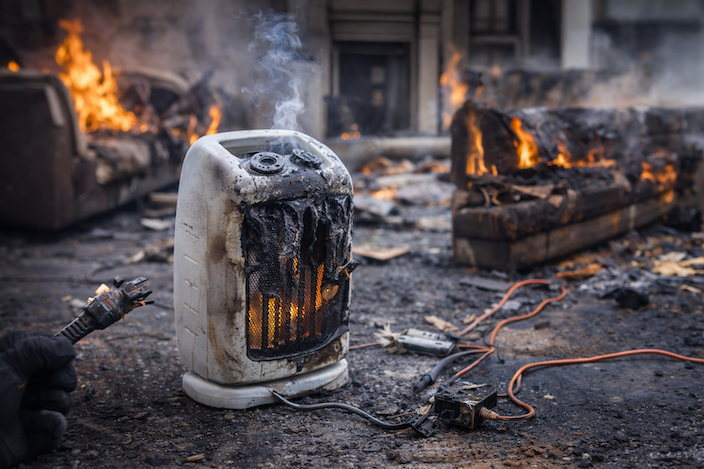
Maine winters push families to find fast, affordable heat. Space heaters fill that gap—but they also sit at the center of some of the most preventable home burn and fire cases. Federal safety officials consistently warn that portable heaters contribute to serious residential fires and injuries, especially when people place heaters too close to combustibles, run them unattended, or power them incorrectly.
When a heater sparks a fire or causes a burn, families often ask the same question: Did a defective heater cause this—or did someone use it unsafely? The answer matters because it determines whether a claim fits a space heater burn lawsuit grounded in defective heater product liability, or whether the facts point primarily to homeowner responsibility (or both).
At Peter Thompson & Associates, we see these cases as evidence cases. The strongest claims preserve the heater, document the scene, and identify exactly what failed—whether a product component, a warning label, or a basic safety step that never happened.
Why space heaters cause so many serious burn injuries
Portable heaters concentrate high heat in small spaces, often near couches, bedding, curtains, or kids’ play areas. The U.S. Fire Administration found that portable heater fires (a subset of space heater fires) represented only a small share of heating fires, but they accounted for a large share of fatal heating fires. The same report identified “heat source too close to combustibles” as the leading factor contributing to ignition.
The U.S. Consumer Product Safety Commission reports similar concerns, estimating that portable heaters, including electric space heaters, were involved in thousands of fires during the 2017–2019 period, with dozens of deaths and hundreds of injuries each year.
Those numbers don’t mean every heater case involves a defect. They do show why insurers and investigators immediately focus on placement, power source, and supervision.
What “defective heater product liability” looks like in the real world
A product-liability claim focuses on the heater itself: its design, manufacturing quality, and warnings. Maine recognizes strict products liability for goods sold in a defective condition that are unreasonably dangerous and cause physical harm.
In a heater case, a defect theory often falls into one (or more) of these categories:
1) Design defect
The heater’s design makes it unreasonably dangerous even when someone uses it as intended. Examples include:
- A tip-over shutoff design that fails too easily
- A heater body or guard design that allows dangerously high surface temperatures in normal use
- A thermostat design that permits runaway heating cycles
2) Manufacturing defect
A unit leaves the factory with a problem that similar models don’t have. Examples include:
- Internal wiring defects, loose connections, or components that overheat
- Faulty switches or sensors
- Defective cords or plugs that fail under ordinary household use
3) Failure to warn / inadequate instructions
The heater may need clearer warnings about foreseeable risks. Examples include:
- Weak or unclear “keep-away” distance warnings
- Warnings that don’t match the heater’s real risk profile
- Missing guidance about proper outlets, grounding, or safe placement
A successful space heater burn lawsuit typically proves not only that a defect existed, but also that the defect caused (or substantially contributed to) the burn or fire.
What homeowner responsibility usually means in heater injury cases
Homeowners don’t “cause” a heater to be defective. But homeowners can create dangerous conditions that lead to burns, fires, or severe smoke inhalation—especially when they ignore known safety rules.
CPSC safety guidance includes several recurring themes:
- Keep combustibles (beds, curtains, papers, clothing) at least three feet from the heater.
- Plug space heaters directly into a wall outlet—not an extension cord or power strip.
- Don’t leave heaters running while sleeping or unattended.
- Inspect the heater, cord, and plug for damage before use, and check whether the heater has been recalled.
When a homeowner places a heater against a couch, runs it off an overloaded power strip, or leaves it on overnight in a child’s room, that conduct can shift liability away from the product and toward unsafe use. It can also reduce the value of a product claim if a jury believes the homeowner’s choices caused most of the harm.
Many cases involve both: shared fault and multiple defendants
Heater injuries often sit at the intersection of product issues and human decisions. A thermostat could stick and the heater could sit too close to bedding. A tip-over switch could fail and someone could run the heater through an extension cord.
Maine law addresses shared fault through comparative negligence, which allows recovery but can reduce damages based on the claimant’s share of responsibility.
That framework matters in two ways:
- It can still allow a defective-product case to proceed even when unsafe use played some role.
- It puts enormous weight on documentation that shows how the heater failed and how the incident unfolded.
Evidence that wins these cases
A heater fire or burn scene changes quickly—because cleanup starts, insurers move property, and people throw away “ruined” items. If a family wants to preserve a future defective heater product liability claim, evidence preservation should start immediately (after medical care).
Preserve the heater and all components
- Keep the heater, cord, plug, remote, base, and any detached parts
- Don’t disassemble it or attempt repairs
- Store it in a safe container and keep it dry
Photograph everything before cleanup
- The heater’s position relative to furniture, bedding, curtains, walls, and outlets
- Close-ups of the plug, outlet, scorch marks, and cord routing
- Any labels: brand, model, serial number, wattage, warnings
Capture power and outlet details
- Photograph power strips, extension cords, adapters, and breakers
- Note whether the outlet felt hot or showed discoloration
Document the timeline
- When someone turned the heater on
- Whether anyone heard clicking, smelled burning plastic, or saw flickering lights
- Whether the heater shut off normally or kept running
Save purchase and recall records
- Receipt, online order confirmation, warranty registration
- Any recall notices or customer support emails
- Screenshots of the product listing page (if purchased online)
Keep medical records and injury photos
- ER/urgent care notes, burn depth assessments, graft records, follow-ups
- Photos of injuries across the healing timeline
This evidence helps experts evaluate causation and helps attorneys identify the correct defendants (manufacturer, retailer, distributor, or others).
Talk to a Maine injury lawyer early if a space heater caused burns
A serious burn case can involve long-term scarring, infections, surgeries, and permanent nerve damage. A product case can also require technical experts and fast preservation before evidence disappears.
If a space heater caused a fire or burn injury in Maine, Peter Thompson & Associates can help investigate whether a defect played a role, preserve the heater and scene evidence, and evaluate whether the facts support a space heater burn lawsuit—even when the insurer tries to frame the incident as “user error.”
This article provides general information and does not constitute legal advice.