

Invisible Injuries After a Crash: PTSD, Anxiety, and Other Harms
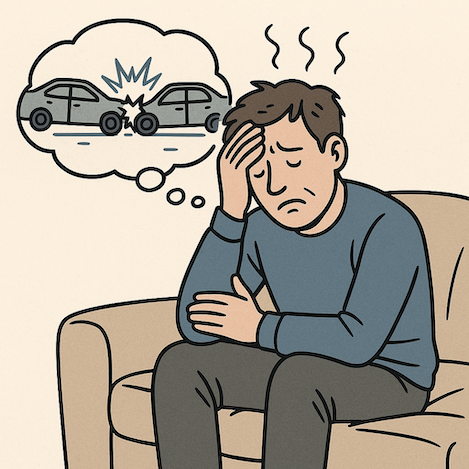
After a serious car crash, everyone focuses on the obvious injuries—the broken bones, the stitches, the neck brace. But many people walk away from a wreck with no visible scars and still feel like their life has been shattered. They can’t sleep, they panic behind the wheel, or they replay the impact over and over in their minds.
Those are not “overreactions.” They are real injuries, and the law can treat them just as seriously as physical harm.
This article explains how PTSD, anxiety, and other non-physical injuries develop after a crash, how they affect daily life, and how they fit into an injury claim.
What do “invisible injuries” after a crash look like?
You can’t see emotional trauma on an X-ray, but you can see its impact on a person’s life. After a collision, people commonly experience:
- Intrusive memories of the crash, nightmares, or flashbacks
- Avoidance of driving, riding in cars, or even going near the crash location
- Hypervigilance—constantly scanning for danger, jumping at sounds, startling easily
- Mood changes, such as irritability, anger, guilt, or feeling emotionally numb
- Sleep problems, including insomnia or waking up in a panic
- Panic attacks in traffic or crowded places
- Depression, loss of interest in favorite activities, or withdrawal from friends and family
Some people function “well enough” to go back to work but feel like a different person inside. Others simply can’t get behind the wheel again. In serious cases, people may meet the criteria for Post-Traumatic Stress Disorder (PTSD) or another diagnosable condition such as major depression or generalized anxiety.
How PTSD and anxiety develop after a crash
A car crash happens suddenly and violently. It combines several elements that tend to trigger trauma:
- A threat to life or serious injury to you or someone nearby
- A feeling of complete loss of control
- Shocking sights and sounds—screeching brakes, crumpling metal, shattered glass
- Pain and confusion immediately after impact
The brain can “lock” onto that experience and treat ordinary situations—like driving past a similar intersection—as if the danger is still happening. That’s why, even months later, a person may feel their heart race, their breathing quicken, and their muscles tense as if they’re about to be hit again.
You do not have to be physically mangled to develop PTSD. Many crash survivors who walked away with soft-tissue injuries or no visible wounds still struggle with severe psychological fallout.
Why these injuries matter in a legal claim
Personal injury law doesn’t limit compensation to broken bones and hospital bills. It recognizes pain and suffering, emotional distress, and loss of enjoyment of life as real damages.
Non-physical harms can affect:
- Your ability to work in your chosen job (for example, commercial drivers who can’t get back on the road)
- Your willingness to travel, socialize, or take part in family activities
- Your marriage and relationships, especially if irritability and isolation take over
- Your long-term mental health, including the risk of substance use as a coping mechanism
When an at-fault driver’s negligence triggers this kind of trauma, your claim should account for therapy costs, medications, lost income, and the ongoing impact of living with PTSD or anxiety, not just the initial ER visit.
Common myths about non-physical crash injuries
People often downplay their emotional injuries because of damaging myths:
“If I didn’t hit my head, it’s just nerves.”
Not true. PTSD and anxiety arise from how your brain processed the event, not just from a physical brain injury. Concussions can make things worse, but they’re not required.
“If I were tougher, I’d get over it.”
Two people can experience the same crash and react very differently. That doesn’t mean one is “weak.” Past experiences, biology, and life stress all affect how trauma shows up. The law doesn’t require you to be superhuman; it asks whether a reasonably careful driver would have caused this harm.
“The insurance company won’t believe me.”
Insurers often do try to minimize emotional injuries, but proper documentation and professional evaluations can make these harms difficult to ignore. That’s where medical providers and a good lawyer come in.
How to document invisible injuries after a crash
If you notice emotional or psychological symptoms after a collision, you can take practical steps to protect both your health and your claim:
- Tell your doctor the truth.
Don’t say “I’m fine” if you’re not. Mention nightmares, panic attacks, trouble driving, and changes in mood or sleep. Ask whether a referral to a mental-health professional makes sense. - Follow through with treatment.
Attend counseling sessions, take prescribed medications as directed, and keep follow-up appointments. Gaps in treatment make it easier for insurers to argue you “must be better now.” - Keep a symptom journal.
Briefly record bad days, panic attacks, missed events, sleep problems, and situations you avoided because of fear. This journal can later help you remember details when you speak with your lawyer or testify. - Ask loved ones to note changes.
Spouses, partners, and close friends often notice early warning signs—withdrawal, irritability, lack of motivation—that you may not see in yourself. - Avoid social media posts that downplay your struggles.
Insurers love to point to smiling photos or upbeat posts as “proof” that you’re fine. Remember that they don’t show the full picture.
How a personal injury lawyer can help
A firm like Peter Thompson & Associates understands that a crash can wound more than bones and muscles. An experienced Maine injury lawyer can:
- Listen carefully to how the crash changed your daily life
- Connect you with appropriate medical and mental-health professionals
- Gather records and expert opinions that explain your diagnosis and prognosis
- Push back when insurance companies try to label your trauma as “minor” or “unrelated”
- Present your story in a clear, compelling way to adjusters, mediators, or a jury
By treating emotional injuries as seriously as physical ones, your lawyer can pursue compensation that reflects the full scope of what you’ve lost—and what you’ll continue to live with—because of the crash.
The bottom line
Invisible injuries after a crash are still injuries. PTSD, anxiety, depression, and other non-physical harms can reshape your life just as dramatically as a broken spine or a shattered leg. If a negligent driver caused a collision that left you struggling emotionally, you don’t have to suffer in silence or accept a settlement that ignores your trauma.
Reach out to a qualified personal injury attorney, get the support you need, and make sure every part of your injury—seen and unseen—counts.