

Hotel Pool Injuries: Why “No Lifeguard on Duty” Doesn’t Matter
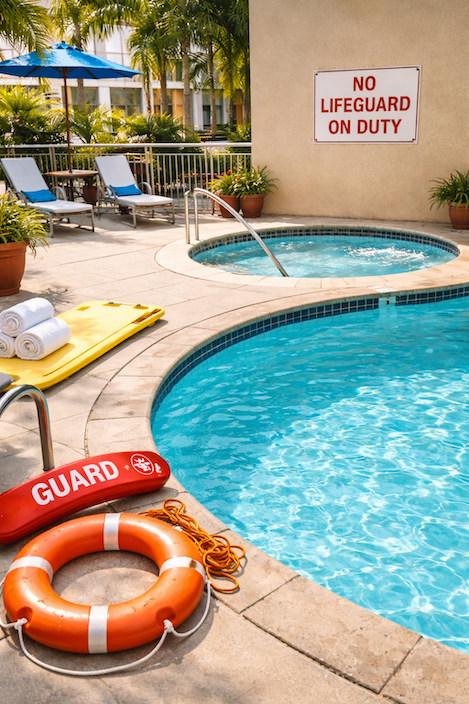
A hotel pool feels like a perk, not a hazard. Families arrive tired from travel. Kids sprint toward the water. Adults juggle towels, room keys, and phones. The hot tub looks like a quiet place to unwind—until a slip, a submersion, or a chemical exposure turns a vacation into an emergency.
When these incidents happen, hotels and insurers often lean on a familiar line: “No lifeguard on duty.” Many people hear that phrase and assume the hotel has no responsibility. That assumption is wrong. Maine law does not require a lifeguard at every public pool, but it still requires responsible supervision and safe operation—and it does not erase a hotel’s duty to protect guests from preventable hazards.
This article explains the most common hotel pool and hot tub injury scenarios, the myths that can derail a claim, and the evidence that often proves negligence.
Drowning and near-drowning: the risk is real, and it’s often silent
Drowning rarely looks dramatic. A child can slip under the surface without splashing. An exhausted adult can black out. A weak swimmer can panic in seconds. Hot tubs create additional risk because heat, alcohol, and fatigue can combine with deep water and crowded seating.
National data highlights why these events demand serious attention. The U.S. Consumer Product Safety Commission (CPSC) reports that young children account for a large share of pool- and spa-related drowning and near-drowning injuries, including a high percentage of emergency-department-treated nonfatal drowning injuries involving children under five.
Hotels cannot control every decision a guest makes, but they can control the environment. In practice, hotel drowning and near-drowning cases often come down to preventable breakdowns such as:
- poor visibility (dim lighting, cloudy water, glare)
- missing or inadequate barriers and self-latching gates
- confusing rules or missing warnings for parents
- lack of readily available emergency equipment or trained staff response
- overcrowding without controls
- delayed discovery because no one actively monitors the area
The “no lifeguard” myth: Maine doesn’t require a lifeguard, but it still requires safe operation
Maine law makes two points that matter in injury cases:
- A public pool or spa must be under the supervision of a qualified person responsible for safe and sanitary operation, as defined by ANSI and pool/spa professional standards.
- Maine’s pool statute says the chapter “may not be construed to require a lifeguard” to be on duty when the pool or spa is open.
Hotels sometimes twist that second point into: “We had no duty.” The law doesn’t say that. It says the state pool rules don’t require lifeguards—not that the hotel can ignore safety.
Maine’s public pool rules also require a specific warning when lifeguards are not present: every public pool/spa without a lifeguard must post a conspicuous sign stating there is no lifeguard on duty and that all children must be supervised in the pool or spa area.
So the real question becomes: Did the hotel operate the pool area reasonably and comply with safety rules? A missing sign, a locked gate propped open, broken safety equipment, or an untrained front desk response can move a case from “accident” to “negligence.”
Chemical burns and respiratory injuries: pool chemistry can injure guests fast
Most people think of chemical incidents as “operator mistakes in the pump room,” but chemical injuries can reach guests in multiple ways:
- chlorine or acid fumes released by improper handling or mixing
- accidental over-chlorination or incorrect dosing
- chemical spills near the pool deck
- strong disinfectant levels that irritate eyes/skin or worsen asthma
- mishandled shock treatments in poorly ventilated areas
The CDC warns that pool chemicals can injure people when they are mixed together or handled improperly, and it promotes specific safety practices for operators and staff. The CDC also notes that direct contact with chlorine (liquid or concentrated vapor) can cause severe chemical burns.
Hotels reduce chemical injury risk when they train staff, follow safe handling procedures, control access to chemicals, and monitor water chemistry consistently. The CDC also provides operational guidance on maintaining disinfectant and pH levels and testing while open.
When a guest suffers a chemical burn or respiratory injury, evidence often exists—if someone preserves it early. Operator logs, dosing records, incident reports, and maintenance contractor notes can show whether the hotel followed basic safety steps.
Entrapment and suction injuries: a hidden hazard hotels must take seriously
Suction entrapment incidents are rare, but when they happen, they can cause catastrophic harm—especially in hot tubs and spas where suction outlets sit close to seated guests.
Maine’s pool rules address entrapment prevention for public pools and spas, including requirements tied to suction outlet systems. Federal law also targets this danger. The Virginia Graeme Baker Pool and Spa Safety Act (VGB) and related CPSC regulations address pool and spa drain cover safety.
In litigation, these cases often focus on whether the property maintained compliant drain covers, inspected them, and corrected defects promptly.
What evidence proves a hotel pool or hot tub case?
Hotels and insurers move quickly after a serious pool incident. Video gets overwritten. Logs “go missing.” Witnesses head home. You strengthen your case when you preserve:
- surveillance footage from pool entrances, hallways, and the pool deck
- photos of signage, gates, lighting, water clarity, and warning placards
- incident reports, staff call logs, and 911 timing
- chemical test logs, dosing records, and vendor service notes
- maintenance records for drains, filters, and safety equipment
- witness contact information (especially non-family guests)
If a child drowned or nearly drowned, you should also request and preserve evidence of barriers, gate latches, and any policies about child supervision and pool access.
Talk with Peter Thompson & Associates
A hotel does not escape responsibility just because it posts “no lifeguard on duty.” Maine law still requires responsible supervision and compliance with pool safety rules, including conspicuous signage when lifeguards are not present. When a hotel’s choices—poor barriers, missing warnings, unsafe chemical handling, inadequate maintenance, or slow emergency response—contribute to a pool or hot tub injury, you may have a valid claim.
If you or a loved one suffered a drowning/near-drowning event, a chemical burn, or another hotel pool or hot tub injury in Maine, contact Peter Thompson & Associates to discuss what happened and how to preserve the evidence that can protect your case.