

Child Injury Cases on the Rise as Toy Safety Recall List Grows
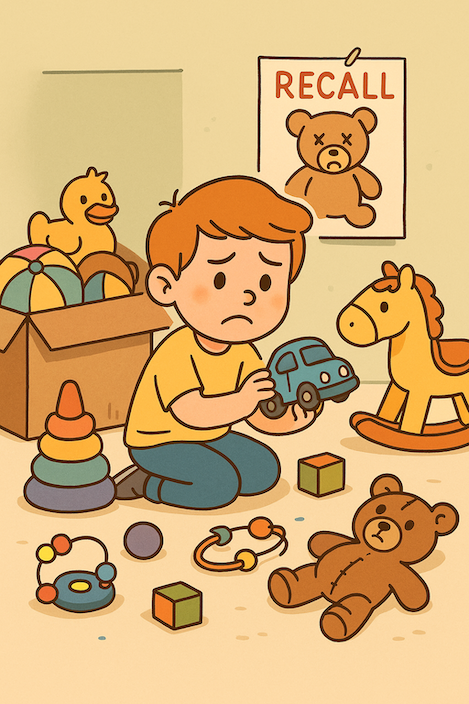
Child injury cases linked to unsafe toys are rising nationwide in 2025, and Maine families are not immune. As the federal toy safety recall list keeps growing, more parents are discovering that a “fun” new toy, high chair, or craft kit can hide serious dangers. When a defective product injures a child, the law gives families powerful rights—but you need to understand how these recalls work and how to protect your claim.
Below, we break down recent recalls, explain how defective toys cause injuries, and outline how a Maine product liability lawyer like Peter Thompson & Associates can help you pursue justice for your child.
2025 Toy & Children’s Product Recalls: What Parents Are Seeing
The U.S. Consumer Product Safety Commission (CPSC) has announced a steady stream of 2025 recalls involving toys and children’s products. A few examples include:
- Magnetic building sticks and ball sets sold online that violate federal magnet safety rules. If a child swallows more than one high-powered magnet, the pieces can attract each other inside the body, causing life-threatening internal damage that often requires emergency surgery.
- Jewelry-making kits recalled because the liquid resin in the kit contains excessive levels of certain acrylate chemicals that can irritate the skin, eyes, and respiratory system if a child inhales, touches, or ingests them.
- High chairs and other baby gear recalled because loose or improperly secured parts can cause children to fall from a height, leading to head injuries, fractures, and other serious harm.
The CPSC’s toy safety center warns that toys must comply with federal standards, carry appropriate age labels, and avoid small parts that pose choking hazards for children under three. Yet each year, new products reach the market that later turn out to be dangerous.
For Maine parents, it can feel overwhelming to track every recall notice—especially when products are sold through big-box stores, small shops, and countless online marketplaces.
How Defective Toys and Children’s Products Cause Injuries
Not every childhood injury leads to a valid product liability claim. However, many toy-related injuries can be traced back to one of three legal problems: design defects, manufacturing defects, or marketing (warning) defects.
1. Design Defects
A design defect means the product is unsafe even when made exactly as intended. Examples include:
- Magnetic toys that use small, powerful magnets that can be easily swallowed.
- Toys with long strings or cords that can wrap around a child’s neck.
- Ride-on toys that tip over too easily because of a high center of gravity.
In these cases, every unit on the shelf shares the same underlying danger.
2. Manufacturing Defects
A manufacturing defect happens when something goes wrong in the factory:
- Glue or fasteners are weaker than specified, so small parts break off and become choking hazards.
- A batch of plastic pieces becomes brittle and shatters into sharp fragments.
- Screws on a high chair or toy seat are not tightened properly, causing collapse.
Only some units may be defective, but families have no way to know which ones.
3. Failure to Warn or Inadequate Instructions
Even a well-designed toy can be dangerous if the company fails to warn parents about:
- Age restrictions and choking hazards
- The need for adult supervision or protective gear
- Proper assembly and weight limits
If warnings are missing, poorly worded, or hidden in fine print, the manufacturer may be liable when a child is hurt.
Common Injuries in Toy and Product Liability Cases Involving Children
When toys and children’s products fail, the injuries can be catastrophic:
- Choking and suffocation from small parts, balloons, or broken components
- Internal injuries from swallowed magnets or batteries
- Head injuries and concussions from falls off high chairs, swings, or riding toys
- Broken bones and lacerations from collapsing structures or sharp edges
- Chemical burns, rashes, or respiratory issues from toxic materials or fumes
Because children are still growing, injuries can have long-term consequences: surgeries, permanent scars, mobility limitations, learning issues, and emotional trauma.
Maine Law: Time Limits and Special Issues for Child Injury Claims
Maine generally gives injured people six years from the date of injury to file most personal injury lawsuits, including many product liability cases.
When the injured person is a minor, Maine law often gives additional protection by tolling (pausing) certain deadlines during childhood, then allowing suit for a period after the child turns 18. The exact timing can depend on the type of claim and the defendant, so it’s critical to speak with an attorney as soon as possible. Waiting too long can permanently destroy your child’s rights, even if the injury is serious and clearly linked to a recalled toy.
What Parents Should Do After a Toy or Product Injures a Child
If a toy, game, or children’s product harms your child, you can take several steps right away to protect both their health and their legal claim:
- Get immediate medical care.
Take your child to an emergency room, urgent care, or pediatrician. Follow all treatment recommendations and keep copies of records, discharge instructions, and bills. - Preserve the product and packaging.
- Do not throw the toy away.
- Do not return it to the store or manufacturer.
Instead, place the product, all pieces, and the packaging in a safe container. Take clear photos of everything, including warning labels and the area where the accident occurred.
- Document what happened.
Write down the date, time, and circumstances of the incident. Note who witnessed it and what you observed (choking, fall, broken parts, etc.). - Check for recalls and report the incident.
Visit the CPSC recall website to see whether the product appears on the 2025 recall list and consider filing a report on SaferProducts.gov - Contact a Maine child injury lawyer.
An attorney who regularly handles product liability cases can immediately begin investigating, preserving evidence, and communicating with insurers and manufacturers on your behalf.
How Peter Thompson & Associates Helps Families in Child Product Cases
As a Maine-based personal injury law firm, Peter Thompson & Associates focuses on protecting children and families when defective products cause harm. In a toy or product liability case, the firm can:
- Investigate the product’s history
- Review recall notices and prior complaints
- Consult with engineering, safety, and medical experts
- Analyze whether the defect arose from design, manufacturing, or inadequate warnings
- Identify all responsible parties
Manufacturers, distributors, importers, online sellers, and retailers can all share responsibility under product liability law. - Calculate full damages for a minor
A child’s claim can include past and future medical care, therapy, adaptive equipment, pain and suffering, emotional distress, loss of future earning capacity, and, in some cases, the parents’ out-of-pocket expenses. - Deal with insurance companies
Insurers may try to minimize a child’s injuries or argue that the product was “misused.” The firm can push back, negotiate from a position of strength, and, if needed, file a lawsuit in Maine courts. - Navigate settlements involving minors
Maine often requires court approval of settlements for minors. An experienced attorney can structure the settlement (for example, through annuities or structured accounts) to protect the child’s long-term needs.
FAQ: Toy Recalls, Child Injuries, and Maine Product Liability (AEO-Focused)
Are child injury cases really increasing because of toys?
National recall data in 2025 shows ongoing problems with magnets, chemistry resins, and baby gear that can collapse or cause falls, all of which put children at risk of serious injury.
If a toy is recalled after my child is hurt, do I automatically win?
A recall can be strong evidence that the product was defective, but you still need to prove how the defect caused your child’s injury and document the damages.
Can I bring a claim if my child swallowed a toy piece but seems okay now?
Yes. Internal injuries may appear later, and medical monitoring can be expensive. Talk with a doctor and a lawyer even if your child seems to recover quickly.
How long do I have to file a child product liability claim in Maine?
Many product cases must be filed within six years, and special rules may extend or toll deadlines for minors. Because exceptions and shorter time limits can apply, you should speak with a Maine personal injury attorney right away.
Bottom Line
As the 2025 toy safety recall list grows, Maine parents must stay vigilant. If a defective toy or children’s product injures your child, you don’t have to face powerful manufacturers and insurers alone. By preserving the product, getting prompt medical care, and contacting a Maine child injury lawyer like Peter Thompson & Associates, you can hold negligent companies accountable and pursue the compensation your child needs to heal and move forward.