

Carbon Monoxide: When a “Simple Heating Issue” Turns Deadly
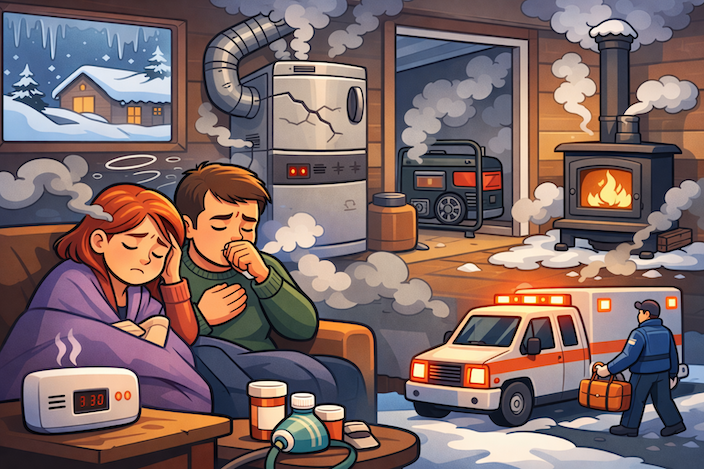
A winter cold snap pushes furnaces, boilers, wood stoves, and space heaters into nonstop use across Maine. Most homes and apartments make it through the season with nothing more than high fuel bills. But every year, heating equipment failures and ventilation problems turn ordinary living spaces into dangerous environments. Carbon monoxide (CO) poisoning often starts quietly, escalates quickly, and leaves victims with serious injuries that do not resolve when the air clears.
CO poisoning cases also raise hard questions about responsibility. A faulty furnace, a blocked flue, an unsafe generator setup, or a neglected inspection can point to negligence—or even a defective product. Understanding how these cases develop helps injured people preserve evidence early and avoid getting blamed for a hazard they did not create.
Why carbon monoxide poisoning gets misread as flu, fatigue, or “a bad week”
Carbon monoxide disrupts the body’s ability to carry oxygen. That mechanism creates symptoms that can look ordinary at first—especially in the middle of winter, when people expect to feel rundown.
Common early symptoms include headache, dizziness, nausea, confusion, weakness, shortness of breath, and unusual sleepiness. Families often notice a pattern: multiple people in the same household feel sick at the same time, and symptoms improve when they leave the home. Those details matter because CO exposure can resemble viral illness, food poisoning, or migraine symptoms. The risk rises when someone falls asleep in a contaminated space. Prolonged exposure can cause loss of consciousness, seizures, organ damage, and—in the worst cases—death.
These cases also create a timing problem. By the time a doctor suspects CO exposure, the source may have stopped producing gas, the property owner may have “fixed” the issue, or an appliance may have been removed. That is why early documentation often makes or breaks a faulty furnace CO claim.
Common CO sources in Maine winters
Carbon monoxide forms when fuel-burning appliances do not vent properly or do not burn cleanly. In Maine, the most frequent culprits tend to cluster around winter routines.
Venting failures and blocked flues
A furnace or boiler can run “fine” while venting exhaust into a basement, crawl space, or wall cavity. Corrosion, disconnected vent pipes, animal nests, ice buildup, snow drift blockage, and damaged chimney liners can all trap exhaust. A blocked flue can turn a routine heating cycle into a hazardous event.
Poorly maintained or aging heating systems
Neglected maintenance increases risk. Soot buildup, cracked heat exchangers, improper burner adjustment, and inadequate combustion air can cause dangerous emissions. Owners sometimes postpone service calls to save money, and renters often assume management handles inspections. When a landlord ignores known issues, landlord carbon monoxide liability becomes a central focus.
Portable generators and improvised power setups
Winter storms bring power outages—and generator use. CO poisoning spikes when people run generators in garages, near doors and windows, or under overhangs. Exhaust can infiltrate living spaces even when people open the garage door “for ventilation.” A defective generator, missing warnings, or poor instructions can also contribute to product-related claims.
Gas appliances, water heaters, and dryers
Gas water heaters, ovens, ranges, and dryers can generate CO when venting fails. Backdrafting can occur when exhaust flows the wrong direction due to pressure differences in the home, especially in tight, winter-sealed buildings.
Wood stoves, pellet stoves, and other solid-fuel appliances
Improper installation or damaged flue components can send smoke and CO into living spaces. Poor drafting, blocked chimneys, and inadequate clearances can create risk, especially after storms.
When a CO exposure becomes a personal injury case
Many CO incidents result from preventable failures. A legal claim typically focuses on who controlled the hazard and who had the duty to prevent it.
Landlord negligence and property management failures
Landlords and property managers often control equipment selection, maintenance schedules, and repairs. A landlord may face liability when they ignore tenant complaints (unusual odors, soot, recurring headaches), delay inspection, perform incomplete repairs, or fail to correct ventilation defects. A landlord may also create risk by installing appliances improperly or hiring unqualified contractors.
Negligent installation or service work
HVAC contractors, plumbers, and installers can cause or worsen CO hazards through incorrect venting, improper sizing, failed combustion testing, or code-violating installation. A single mistake—like failing to secure a vent connector—can lead to dangerous exhaust leakage. These cases often rely on service records, invoices, and expert evaluation of installation quality.
Defective product claims
Some incidents trace back to a manufacturing defect, design flaw, or inadequate warnings. A furnace component failure, faulty sensor, defective generator, or malfunctioning detector can shift the case toward product liability. Product cases depend heavily on preserving the device and documenting how it operated before anyone discards it.
Evidence that matters in CO cases
CO cases move fast, and evidence can disappear even faster. The strongest claims usually include clear documentation from the earliest response.
- Fire department or emergency response records: These reports can confirm elevated CO levels, identify the suspected source, and document the scene.
- Detector status and placement: Photos of CO detectors, battery condition, and alarm history can matter, especially when parties argue about warnings.
- HVAC service records and maintenance logs: Invoices, inspection stickers, prior repair notes, and tenant maintenance requests can show notice and delay.
- Property condition photos and videos: Vent pipes, chimneys, generator placement, snow/ice blockage, and any visible corrosion or disconnections deserve immediate documentation.
- Medical records tied to exposure: EMS notes, ER evaluations, lab testing, oxygen therapy, and follow-up neurological assessments link symptoms to CO exposure.
- Preservation of equipment: People often replace a furnace, water heater, or generator immediately after an incident. That step can destroy critical evidence. A prompt request to preserve the equipment can protect the claim.
Damages often extend beyond the initial ER visit
Some CO poisoning victims recover quickly. Others deal with persistent cognitive issues, headaches, mood changes, sleep disruption, or exercise intolerance. Severe exposures can cause lasting neurological injury. CO incidents also create practical losses: missed work, ambulance transport, temporary housing, and ongoing medical monitoring.
A thorough claim documents not only the initial emergency, but also the lingering impact on daily function and employment.
When to talk with counsel
Carbon monoxide cases often trigger immediate repairs and fast-moving insurance decisions. That speed can benefit the property owner, contractor, or manufacturer if key evidence disappears. Early legal guidance can help preserve records, secure expert evaluation, and identify all potentially responsible parties.
Peter Thompson & Associates represents people injured by preventable hazards, including carbon monoxide exposures tied to faulty heating equipment, unsafe properties, negligent maintenance, and defective products. The firm can evaluate the facts, help preserve evidence, and pursue compensation for medical costs, lost income, and long-term effects—so a “simple heating issue” does not turn into a lifetime burden.