
The Dangers of Blackouts: Common Injuries In Extreme Weather
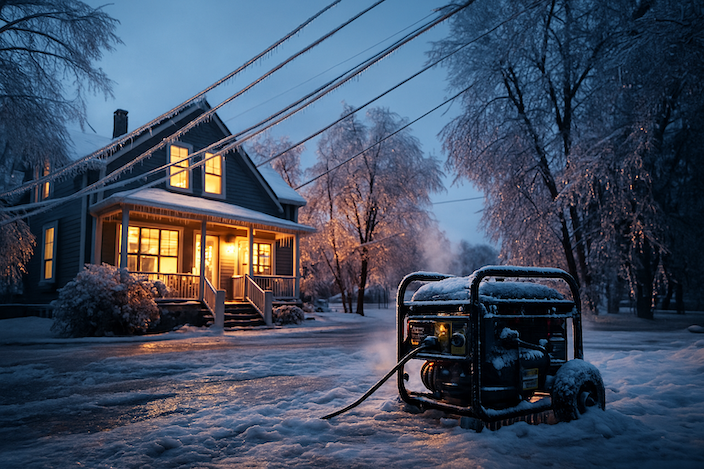
When an ice storm hits Maine, you brace for slippery roads and downed trees. But some of the most serious injuries happen after the storm, inside homes and apartments. Slick steps cause falls, power outages trigger blackouts, and gas-powered generators quietly fill living spaces with deadly carbon monoxide (CO).
When extreme weather leads to serious injuries or deaths, Maine families often ask the same question: Was this just an “act of God,” or do we have a claim against someone who cut corners on safety? In many cases, the answer depends on what landlords, utilities, property owners, and product manufacturers did—or failed to do—before and during the storm.
How ice storms and blackouts lead to injuries
Maine winters regularly bring freezing rain, heavy snow, and brutal winds. Those conditions create a chain reaction of hazards:
- Icy walkways and steps at apartment buildings, parking lots, and businesses
- Downed power lines and outages lasting hours or days
- Improvised heat and light sources, like space heaters, wood stoves, candles, and portable generators
Each link in that chain can produce a different kind of injury claim.
Slip-and-falls on ice and snow
Property owners in Maine have a duty to take reasonable steps to keep their premises safe. That doesn’t mean they must instantly remove every snowflake, but it does mean they should:
- Treat walkways with sand or salt
- Clear snow and ice from entrances, driveways, and common areas
- Fix drainage problems that repeatedly cause refreezing
- Provide adequate lighting so people can see hazards at night
When landlords or businesses ignore these responsibilities, they increase the risk of:
- Broken bones and hip fractures
- Wrist and elbow injuries from trying to break a fall
- Head injuries and concussions
- Back and spinal injuries
If you slip on a sheet of untreated ice in a parking lot that hasn’t seen a plow or a bag of sand all day, that’s often negligence, not just bad luck.
The hidden danger: carbon monoxide during blackouts
When the power goes out in a Maine winter, families scramble to stay warm. Unfortunately, many turn to gas-powered generators, grills, or unvented heaters, which can produce dangerous levels of carbon monoxide.
CO is colorless and odorless, and it can build up quickly in enclosed or partially enclosed spaces. The CDC warns that generators can produce CO levels high enough to kill in minutes if they run inside a home, basement, garage, or too close to windows and vents. Symptoms can include:
- Headaches and dizziness
- Nausea and vomiting
- Confusion and weakness
- Loss of consciousness and death
Every winter across the U.S., news outlets report clusters of CO poisonings after storms and blackouts—many involving families who moved a generator “just inside the garage,” or set up a charcoal grill inside for warmth.
In Maine, landlords, property managers, and product manufacturers must anticipate these risks and follow safety rules designed to prevent tragedy.
Who may be responsible after a CO poisoning?
Not every carbon monoxide incident leads to a claim, but many do. A careful investigation often reveals preventable failures such as:
Landlords and property managers
Landlords may be liable if they:
- Fail to install or maintain required CO detectors in rental units
- Ignore known problems with furnaces, boilers, or chimneys
- Delay repairs on cracked heat exchangers or blocked flues
- Disable or never replace beeping detectors instead of fixing the source of the leak
If a tenant’s family suffers CO poisoning because the landlord cut corners on basic safety, a personal injury claim—or even a wrongful death claim—may be appropriate.
Product manufacturers and sellers
Sometimes the problem lies with the equipment itself:
- Defective generators or heaters that leak exhaust where they shouldn’t
- Inadequate warnings or instructions that fail to explain CO risks clearly
- Design choices that make it easy for exhaust to enter a home
In those cases, a product liability claim can target the manufacturer, distributor, or retailer, even if the injured family never dealt with them directly.
Others who contribute to the danger
Contractors, HVAC companies, and maintenance workers may also bear responsibility if they:
- Install systems improperly
- Ignore code requirements for venting
- Fail to warn occupants about unsafe setups
A Maine injury lawyer can sort through the facts and identify every responsible party.
What to do after storm-related injuries or CO exposure
After an ice storm or blackout, you may feel overwhelmed, especially if you’re dealing with hospitalization or the loss of a loved one. Taking a few key steps can protect both your health and your legal rights:
- Get immediate medical care.
For CO exposure, insist on evaluation right away. Explain that you suspect carbon monoxide and ask providers to document all symptoms and tests. - Report the incident.
- For slip-and-falls, notify the property owner or manager, and request an incident report.
- For CO exposure, contact the fire department or local code enforcement so they can test the premises and document the source.
- Preserve evidence as soon as it’s safe.
- Take photos of the icy area, missing railings, unlit stairs, or broken equipment.
- Photograph CO detectors (or lack of them), appliances, generators, and venting.
- Save damaged devices or space heaters.
- Gather documents.
Keep copies of leases, repair requests, emails with landlords, generator manuals, and any prior complaints about heat or safety issues. - Avoid quick settlements or recorded statements.
Insurance adjusters may call early, hoping you’ll downplay your injuries or accept minimal compensation. You have the right to speak with an attorney first.
How a Maine personal injury lawyer can help
A firm like Peter Thompson & Associates can investigate storm-related injuries and CO poisonings by:
- Reviewing medical records to understand the full extent of injuries
- Obtaining fire department, code enforcement, or utility reports
- Working with engineers, building code experts, and toxicology specialists
- Identifying all sources of insurance coverage, including landlord policies and product liability coverage
- Pursuing compensation for medical bills, lost wages, long-term disability, and the emotional toll of the event
Extreme weather may be unavoidable in Maine, but careless decisions during and after a storm are not.
The bottom line
Ice storms, blackouts, and carbon monoxide incidents are not always “no one’s fault.” When landlords neglect safety, property owners ignore ice hazards, or manufacturers sell dangerous equipment with poor warnings, Maine families pay the price.
If you or a loved one suffered a serious injury after an ice storm or CO exposure, you have the right to ask hard questions—and to seek help from an experienced Maine personal injury lawyer who knows how to hold the right parties accountable.